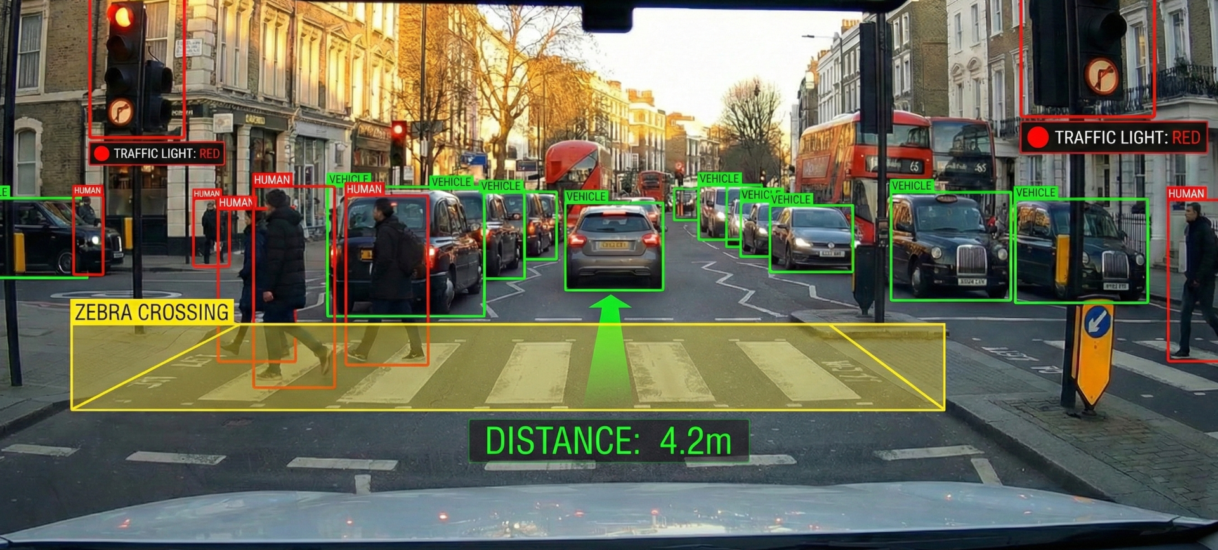
ADAS calibration in Leominster: What you see V’s what the car is seeing

Thursday 15th January 2026

car outline page divider

If you drive anything fairly modern, chances are your car is quietly helping you more than you think. That gentle nudge back into lane. The warning beep when something is in your blind spot. The car that slows itself in traffic. The system that brakes hard when it thinks you have not seen what’s ahead. All of that sits under one heading: ADAS, or Advanced Driver Assistance Systems to give it’s full name.

A useful way to think about it is this: you are looking at the road with your eyes and experience. The car is looking at the road with sensors and maths. You might see a car ahead slowing gently, a lane line that is worn but still readable, a cyclist tucked close to the kerb, or a bend coming up with traffic flowing normally. The car is “seeing” something different. It is turning the world into data: shapes, distances and closing speed, lines and edges rather than lanes, contrast and reflectivity rather than “that’s a cyclist”, and a target area in front of the car rather than what most of us would call a safe gap. When everything is aimed correctly, what you see and what the car is seeing line up nicely. When a sensor is slightly out, the car can be confidently wrong.

At Oldfields Garage in Leominster, Herefordshire, we spend a lot of time diagnosing issues that are not noisy, not smoky and not obvious. ADAS Calibration in Leominster is a good example. When it’s working properly, it’s brilliant. When it’s slightly out, it can become unpredictable, over-cautious, or simply not there when you need it. The key point is simple: ADAS is only as accurate as the calibration of its cameras and sensors.

What is ADAS Calibration?

ADAS is a collection of safety and driver-support features that rely on cameras, radar and sensors to monitor the road and react to hazards. Depending on your vehicle, it can include Automatic Emergency Braking (AEB), Lane Keep Assist and Lane Departure Warning, Adaptive Cruise Control, blind spot monitoring, traffic sign recognition and parking sensors or cameras. These systems are not magic. They are measurement tools. They look out from specific points on the vehicle and make decisions based on what they detect.

A small misalignment at the vehicle becomes a much bigger error further down the road. Imagine shining a torch at a wall. If the torch is pointed a tiny bit left, the beam might only be a few millimetres off at your hand, but it can land a long way off where it matters. Sensors work in the same way. A tiny angle error becomes a big positional error as distance increases.
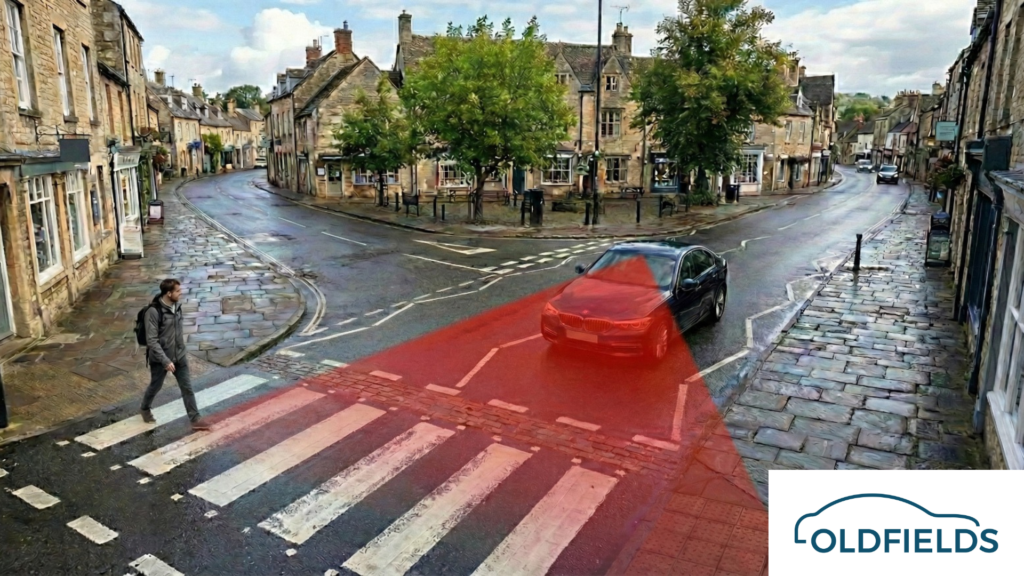
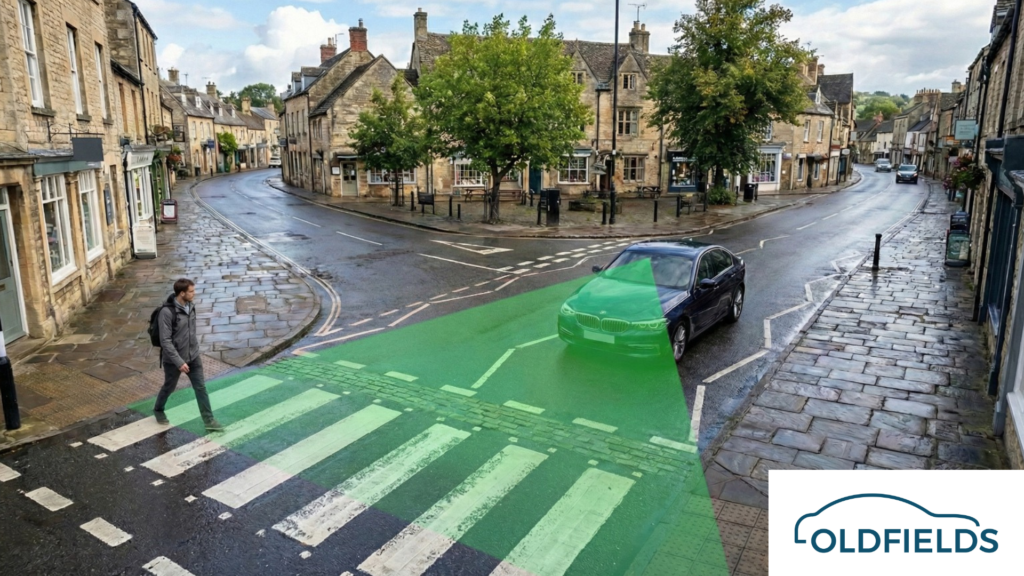
Diagram showing incorrectly aligned vehicle safety sensors with beam deviating.
Incorrectly aligned vehicle safety system sensors.
Diagram showing correctly aligned ADAS sensors with beam on target.
Correctly aligned vehicle safety system sensors.


As a rough guide:

  • 1 degree out can be around 17 cm off at 10 metres
  • Around 87 cm off at 50 metres
  • Around 1.7 metres off at 100 metres

That is enough for a camera or radar to effectively shift where the car believes another vehicle is, which lane markings it trusts, or how quickly something is closing.

In real driving, misalignment does not always trigger a warning light. Sometimes it just feels like the car has developed a personality. You might notice lane assist fighting you or weaving, warnings that seem too sensitive or arrive too late, or adaptive cruise braking earlier than you’d expect. Or you might notice nothing at all until you really need the system to react properly. The line we come back to in the workshop is this: if what you see and what the car is seeing don’t match, the system can’t help you properly.

ADAS calibration in Leominster: it isn’t just for after crashes!

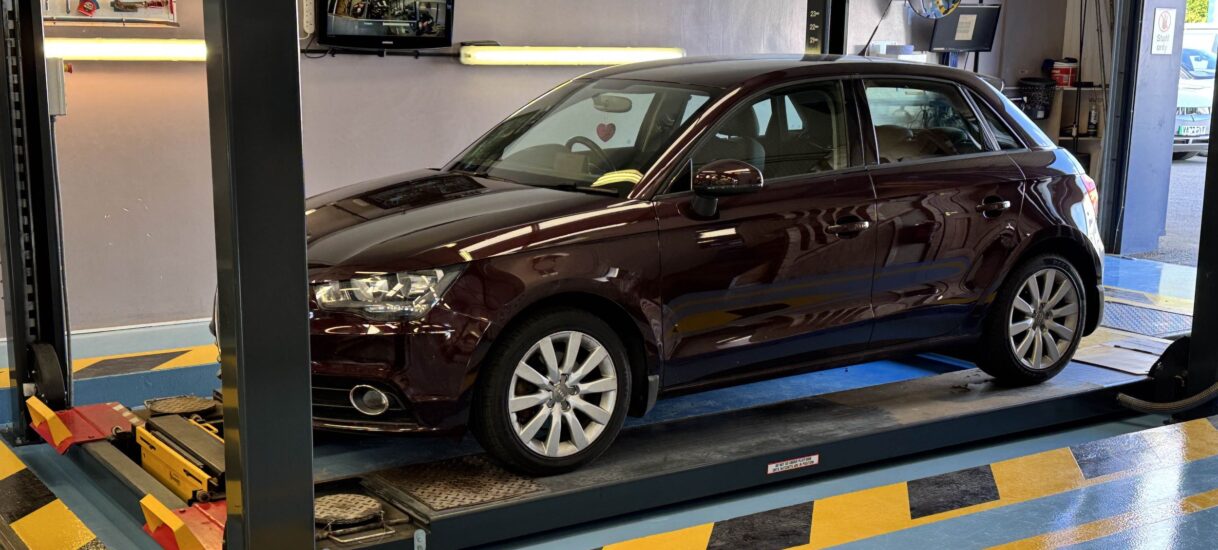
Most people assume calibration is only needed after a crash. In reality, it often comes up after very normal jobs and everyday knocks. It is worth asking the question if you have had a windscreen replacement (especially where the camera sits behind the mirror), wheel alignment or suspension work, any change that affects ride height, front bumper repairs or grille work (common radar mounting areas), or a decent kerb strike, pothole impact or knock to the front end. Even a small change in a mounting position or ride height can alter the sensor’s viewpoint.

We are a practical, straight-talking garage. If something matters, we take it seriously. If it doesn’t, we’ll tell you. We invested in ADAS calibration equipment because modern vehicles are designed around these systems. It’s not enough to fit a windscreen or set tracking and hope for the best. If the vehicle has safety tech that depends on calibration, we want to be able to check it properly and, where required, set it up accurately. That means making sure the car’s sensors are aligned to the manufacturer’s requirements, confirming the system is reading the road correctly again, and giving you confidence that your safety features are working as intended.

The takeaway is straightforward. ADAS is there to help, but it can only help if it has an accurate view of the world. If your car has had a windscreen replaced, suspension or alignment work, bumper repairs, or a knock, it’s worth asking: is the car seeing what I’m seeing?

If you’re in Leominster or anywhere around Herefordshire, call Oldfields Garage or book in online. We’ll talk through what’s been done to the vehicle, whether calibration is needed, and what the sensible next step is, with clear advice and no waffle.
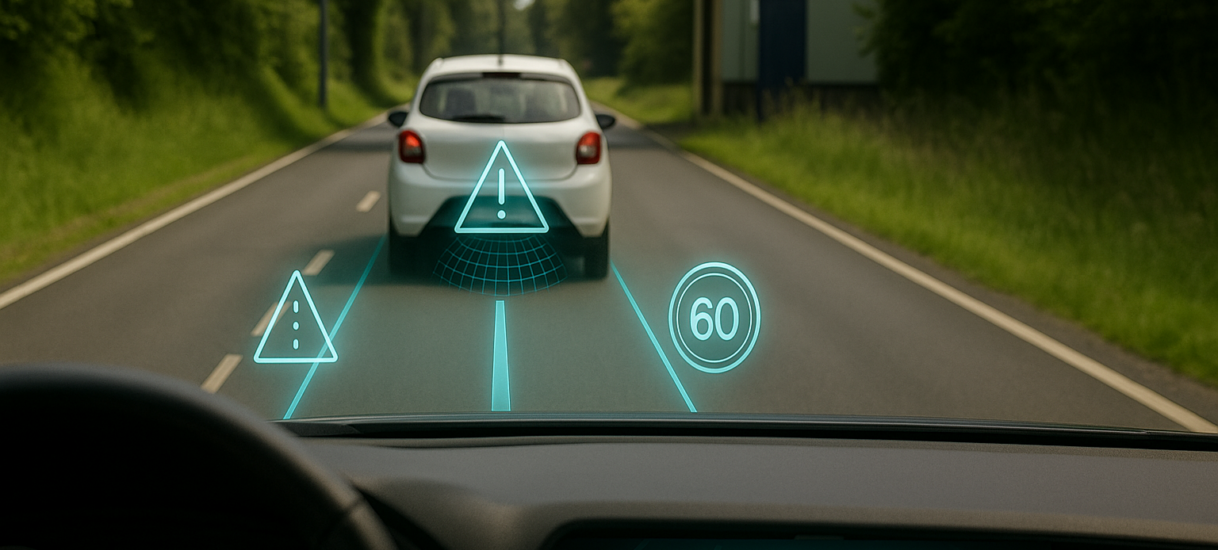
 

The unseen service that saves lives: ADAS calibration done properly

Saturday 1st November 2025

car outline page divider

Advanced Driver Assistance Systems (ADAS) aren’t a fad, they’re now woven into everyday motoring. Parking sensors that chirp at low speeds, through to blind-spot monitoring and traffic sign recognition, up to adaptive cruise, lane keep and automatic emergency braking that can intervene quicker than most humans. At the sharper end you’ll find 360° camera stitching, radar and camera sensor fusion and, on some premium models,  mapping the road in remarkable detail. However clever the badge on the boot, all of these features rely on one uncompromising truth. The hardware must be correctly calibrated to the car if it’s going to behave as expected in all circumstances.

Yes, driverless cars are coming. We’re inching forward with more autonomy and better software over the air. But between today’s reality and tomorrow’s robotaxi sit millions of cars and vans that depend on cameras behind windscreens, radars in bumpers and ultrasonic sensors in mirror housings. A windscreen replacement, a suspension job or a kerb strike can nudge a sensor a few millimetres off axis. That’s enough to move a lane line, slow an emergency response or cause distance control to surge when it should smooth things out. This is not a gadget conversation. It is about the safety of your family in that vehicle.

Are we new to ADAS?

In short, no. At Oldfields, we’ve been able to carry out some ADAS calibrations right here in Leominster, for a number of years, but we’ve been investigating enhanced ADAS solutions. We’re delighted to announce that from January 2026 we’re launching a comprehensive ADAS calibration solution that brings the whole process in-house, end to end. We will follow the correct OE references for targets, positions, ride height and load. We will use quality equipment that is verified and maintained, in controlled lighting on a level floor. Static and dynamic procedures will be completed as specified, with documented pre and post scans, and a road test to confirm the system behaves as expected in the real world.

Shortcuts create risk. Generic settings, guesswork or bargain kit that drifts out of tolerance can all undermine the very systems designed to protect you. Our approach is simple. Use OE data, use calibrated tools, record the results and explain the work.

Why should you do it properly?

There’s a customer experience piece here too. Like choosing a trusted barber or hairdresser, drivers want consistency, transparency and a result that leaves them confident to face the day. We’ll tell you what needs doing, why it matters and what it costs before we begin. ADAS isn’t going anywhere, and neither is our responsibility to keep local vehicles safe, predictable and pleasant to drive. If your car warns, watches or intervenes, proper calibration with the right references and equipment is essential.

The Quickest Way To Book Your Car

Why should you aim for more than the minimum standard?

Friday 23rd May 2025

car outline page divider

At Oldfields, we are acutely aware that the MOT is merely a snapshot of a vehicle’s condition on the day of testing. It confirms that, at that moment, the car met the minimum legal safety and environmental standards. We believe in providing more than that! Vehicles are dynamic machines, and their condition can change rapidly with use and also through lack of use.

Relying solely on the MOT can lead to unforeseen issues. For instance, a component might pass the MOT but be close to its wear limit, leading to potential failures shortly after the test. This reactive approach can result in unexpected breakdowns, inconvenient repairs, and increased costs.

By maintaining a vehicle to a higher standard than the MOT minimum, we adopt a proactive approach. Regular servicing and thorough inspections allow us to identify and address potential issues before they escalate. This not only enhances the vehicle’s reliability but also provides peace of mind to our customers. 

Moreover, a well-maintained vehicle often performs more efficiently, offering better fuel economy and reduced emissions. It also tends to have a higher resale value, as prospective buyers recognize the benefits of consistent upkeep.

At Oldfields, our commitment is to ensure that every vehicle we take care of is not just roadworthy. We also provide a vehicle inspection that takes into account performance and longevity as we don’t believe in working to a minimum standard. We provide our customers with comprehensive care that keeps their vehicles running smoothly and safely throughout the year, enabling them to plan more effectively with minimum unplanned downtime.

September MOT demand surge

Thursday 22nd August 2024

car outline page divider

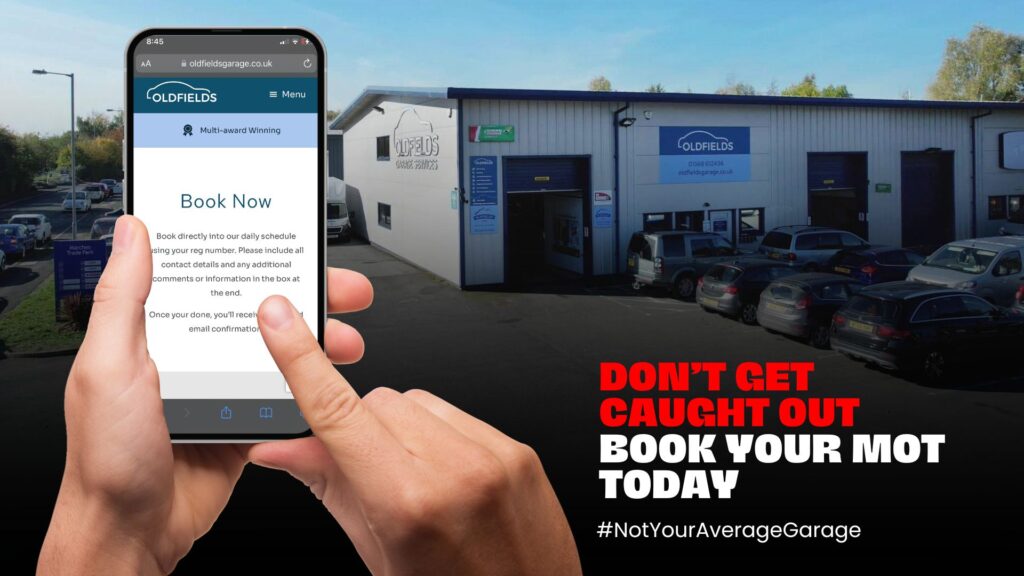
We’re advising customers to book their September MOT early this year as the UK braces for an unprecedented surge in demand.

An estimated 3.4 million cars will require an MOT next month, according to the Driver and Vehicle Standards Agency (DVSA).

The record-braking surge is driven by the high volume of new car sales from three years ago, with those vehicles now reaching their first MOT requirement.

Tim Benson, Oldfields Garage owner said: “We’ve handled busy MOT seasons in the past, but this year is shaping up to be exceptional.

“To make sure you’re not caught off guard by the surge in demand, we strongly recommend booking your MOT as early as possible to avoid the rush and any last-minute stress.”

To avoid the increased demand affecting your schedule, we strongly recommend booking your MOT now and as close to your expiry date as possible.

This will help us to manage the volume fairly for all our customers.  Simply follow this link to book your MOT and Service for a date as close to your expiry as possible.

Mr Benson said: “Drivers can quickly check their MOT expiry date by visiting the GOV.UK website.

“Simply go to the ‘check the MOT status of a vehicle’ page and enter your vehicle’s registration number.

“You can also sign up to receive free text or email reminders a month before your MOT is due for renewal.”

If you’ve accidentally missed your expiry date or find that our online bookings are full, don’t panic!

Please give us a call on 01568 612436 or send us an email and we’ll do our best to accommodate you wherever possible

Drivers can book an MOT at Oldfields Garage online at https://www.oldfieldsgarage.co.uk/book/ or by calling us.

Can you put any oil in your car?

Sunday 12th March 2023

car outline page divider

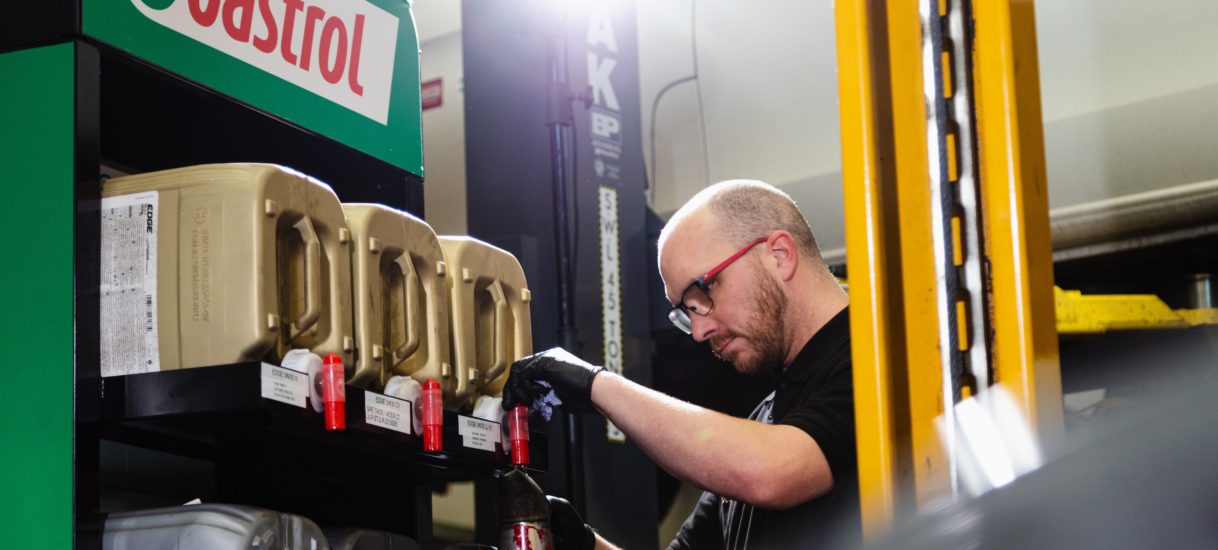
Vehicles are complex machines that need proper lubrication to work efficiently and avoid wear and tear. Engine oil is a crucial part of this system, but with so many types available, it can be hard to choose the right one. Castrol oil is a trusted brand that’s been around for over 120 years. In this blog, we’ll discuss the importance of using the right Castrol oil in a car or van.

  1. Protects the Engine: The right Castrol oil protects your engine from wear and tear by reducing friction and heat build-up in the engine. This is especially important in high-performance engines that generate more heat.
  2. Better Fuel Efficiency: Castrol oil is formulated to reduce friction and improve fuel efficiency. This can save you money on gas and reduce your carbon footprint.
  3. Longer Engine Life: Castrol oil provides long-lasting protection to prevent premature engine wear and extend the life of your vehicle.
  4. Compatibility: Castrol oil is formulated to meet the specifications of different engines and vehicles, so you can find the right type for your car or van, whether it’s gasoline or diesel-powered.
  5. Improved Performance: Castrol oil is designed to maintain its performance under extreme conditions, such as high temperatures and heavy loads. This can improve your engine’s overall performance, making it run smoother, accelerate faster, and handle better.

Using the right Castrol oil is crucial for maintaining your car or van’s health and longevity. It can also improve fuel efficiency, prevent premature engine wear, and enhance overall performance. Always consult your vehicle owner’s manual or a qualified mechanic to find the right Castrol oil for your vehicle.

The Quickest Way To Book Your Car