ADAS calibration in Leominster: What you see V’s what the car is seeing

Thursday 15th January 2026

If you drive anything fairly modern, chances are your car is quietly helping you more than you think. That gentle nudge back into lane. The warning beep when something is in your blind spot. The car that slows itself in traffic. The system that brakes hard when it thinks you have not seen what’s ahead. All of that sits under one heading: ADAS, or Advanced Driver Assistance Systems to give it’s full name.
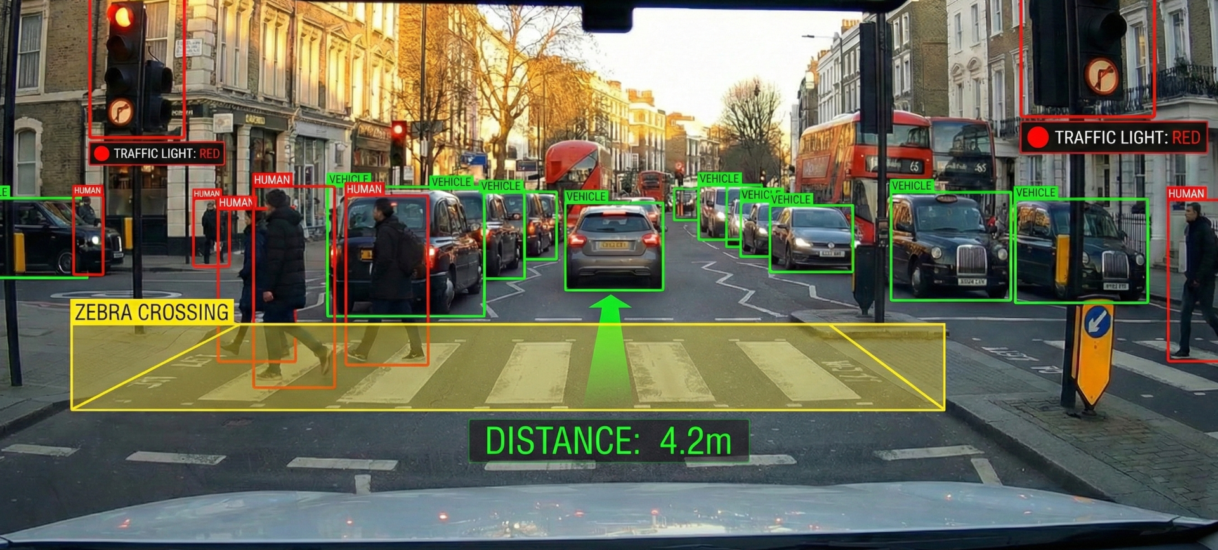
A useful way to think about it is this: you are looking at the road with your eyes and experience. The car is looking at the road with sensors and maths. You might see a car ahead slowing gently, a lane line that is worn but still readable, a cyclist tucked close to the kerb, or a bend coming up with traffic flowing normally. The car is “seeing” something different. It is turning the world into data: shapes, distances and closing speed, lines and edges rather than lanes, contrast and reflectivity rather than “that’s a cyclist”, and a target area in front of the car rather than what most of us would call a safe gap. When everything is aimed correctly, what you see and what the car is seeing line up nicely. When a sensor is slightly out, the car can be confidently wrong.
At Oldfields Garage in Leominster, Herefordshire, we spend a lot of time diagnosing issues that are not noisy, not smoky and not obvious. ADAS Calibration in Leominster is a good example. When it’s working properly, it’s brilliant. When it’s slightly out, it can become unpredictable, over-cautious, or simply not there when you need it. The key point is simple: ADAS is only as accurate as the calibration of its cameras and sensors.
What is ADAS Calibration?
ADAS is a collection of safety and driver-support features that rely on cameras, radar and sensors to monitor the road and react to hazards. Depending on your vehicle, it can include Automatic Emergency Braking (AEB), Lane Keep Assist and Lane Departure Warning, Adaptive Cruise Control, blind spot monitoring, traffic sign recognition and parking sensors or cameras. These systems are not magic. They are measurement tools. They look out from specific points on the vehicle and make decisions based on what they detect.
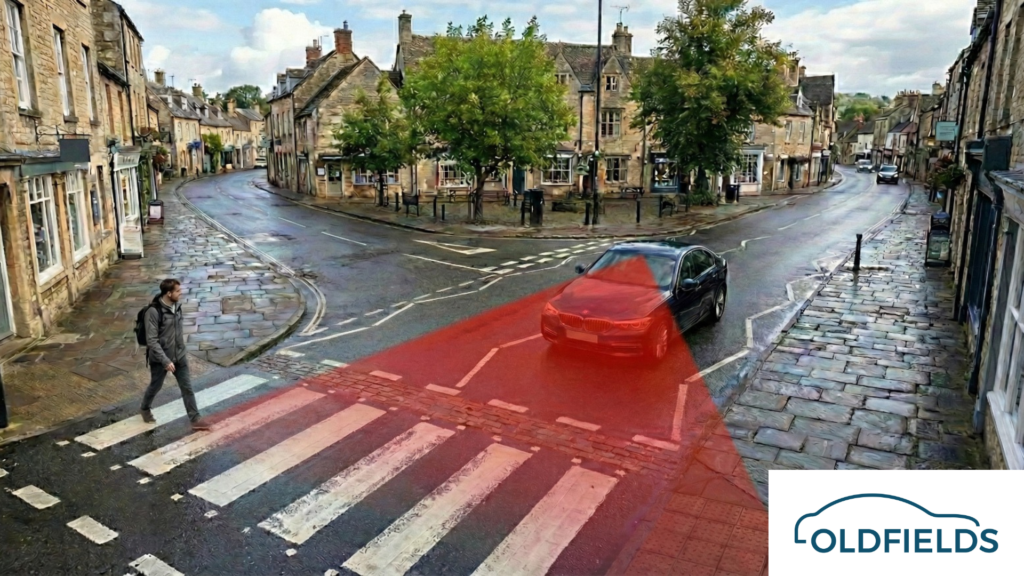
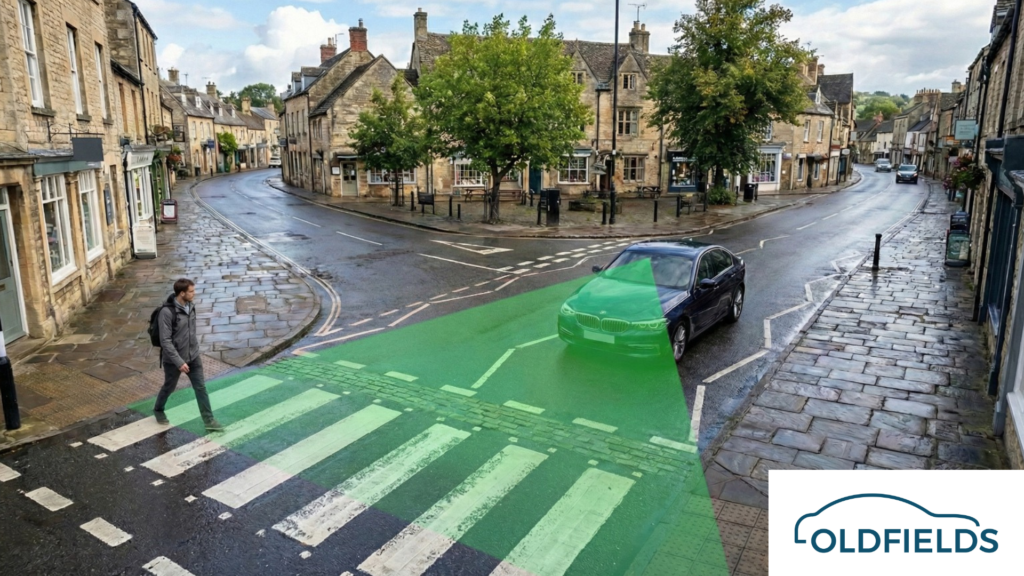
A small misalignment at the vehicle becomes a much bigger error further down the road. Imagine shining a torch at a wall. If the torch is pointed a tiny bit left, the beam might only be a few millimetres off at your hand, but it can land a long way off where it matters. Sensors work in the same way. A tiny angle error becomes a big positional error as distance increases.
As a rough guide:
- 1 degree out can be around 17 cm off at 10 metres
- Around 87 cm off at 50 metres
- Around 1.7 metres off at 100 metres
That is enough for a camera or radar to effectively shift where the car believes another vehicle is, which lane markings it trusts, or how quickly something is closing.
In real driving, misalignment does not always trigger a warning light. Sometimes it just feels like the car has developed a personality. You might notice lane assist fighting you or weaving, warnings that seem too sensitive or arrive too late, or adaptive cruise braking earlier than you’d expect. Or you might notice nothing at all until you really need the system to react properly. The line we come back to in the workshop is this: if what you see and what the car is seeing don’t match, the system can’t help you properly.
ADAS calibration in Leominster: it isn’t just for after crashes!
Most people assume calibration is only needed after a crash. In reality, it often comes up after very normal jobs and everyday knocks. It is worth asking the question if you have had a windscreen replacement (especially where the camera sits behind the mirror), wheel alignment or suspension work, any change that affects ride height, front bumper repairs or grille work (common radar mounting areas), or a decent kerb strike, pothole impact or knock to the front end. Even a small change in a mounting position or ride height can alter the sensor’s viewpoint.
We are a practical, straight-talking garage. If something matters, we take it seriously. If it doesn’t, we’ll tell you. We invested in ADAS calibration equipment because modern vehicles are designed around these systems. It’s not enough to fit a windscreen or set tracking and hope for the best. If the vehicle has safety tech that depends on calibration, we want to be able to check it properly and, where required, set it up accurately. That means making sure the car’s sensors are aligned to the manufacturer’s requirements, confirming the system is reading the road correctly again, and giving you confidence that your safety features are working as intended.
The takeaway is straightforward. ADAS is there to help, but it can only help if it has an accurate view of the world. If your car has had a windscreen replaced, suspension or alignment work, bumper repairs, or a knock, it’s worth asking: is the car seeing what I’m seeing?
If you’re in Leominster or anywhere around Herefordshire, call Oldfields Garage or book in online. We’ll talk through what’s been done to the vehicle, whether calibration is needed, and what the sensible next step is, with clear advice and no waffle.